In 2026, the best Drive-in Storage system is not automatically the one holding the most pallets. It is the system that fits your inventory, forklift, and replenishment pattern without creating a daily traffic jam. Drive-in racks can store many pallets in compact floor space, but forklifts must enter the rack lanes. That trade-off matters. A small mismatch between pallet dimensions and lane clearance can slow every shift.
The MHI and Deloitte 2024 Annual Industry Report surveyed more than 700 supply chain professionals; 55% planned to increase investment in supply chain technology. That figure does not prove drive-in racks are right for every warehouse. It does show why storage choices should support a wider operating plan. The Rack Manufacturers Institute’s guidance on industrial steel storage racks is also a useful technical reference when reviewing rack design and safety. Its guidance is not a substitute for a site-specific engineering assessment.
A practical question for any design review is: “Will this lane fit the pallet, the truck, and the work rhythm?” That is a decision-making prompt, not a quotation attributed to a named expert. I cannot verify a reliable, named Drive-in Storage specialist’s exact words, so I will not invent one. The best system depends on real details: pallet size, SKU count, load turnover, and how often crews need the rear pallet. Get those wrong, and dense storage can become frustrating storage.
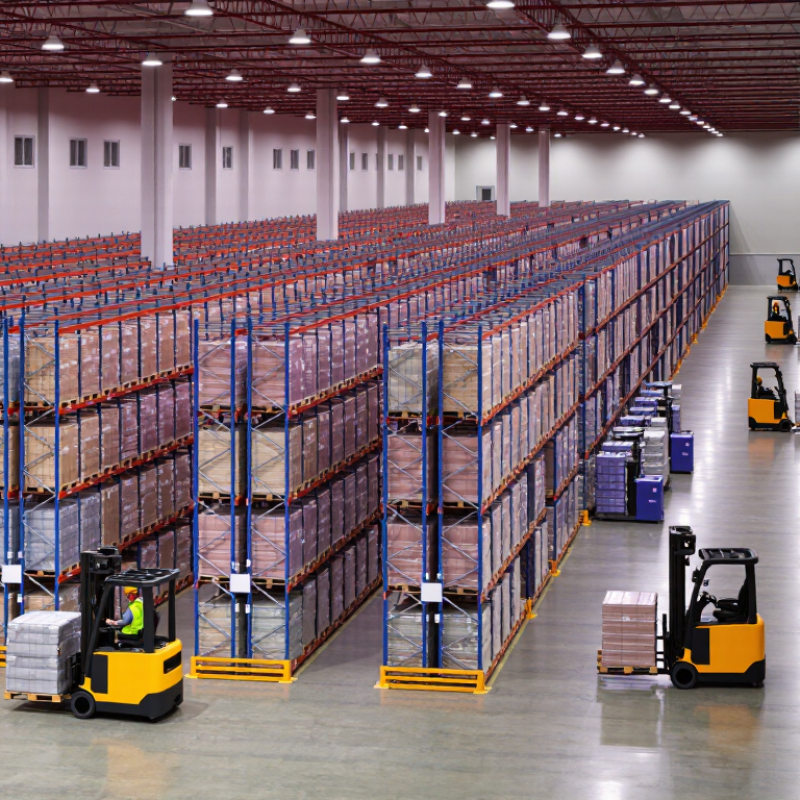
Drive-in racking stores pallets several positions deep on rails, with forklifts entering the storage lane. It uses fewer access aisles than selective racking, so facilities may gain up to 75% more pallet positions, depending on the layout and comparison method. Treat that figure as a planning estimate, not a guarantee. Measure usable building height, sprinkler clearance, forklift turning space, and pallet dimensions before committing.
Access is typically last in, first out (LIFO): the newest pallet loaded into a lane is usually the first retrieved. This suits large, consistent batches of the same product, such as boxed ingredients or seasonal goods. It is less suitable when operators need frequent access to many different SKUs. MHI and Deloitte’s 2024 Annual Industry Report found that 55% of surveyed supply-chain professionals planned to increase technology investment. That points to ongoing pressure to improve operations, but denser storage alone does not solve picking delays. One constraint can become another.
Tips: Keep each lane for one SKU where possible, label lane capacity clearly, and inspect rails and uprights regularly. Test the layout with real forklift routes and daily order patterns. It may look efficient on paper; congestion can still surprise you.
Drive-in racking is a high-density pallet-storage system in which a forklift enters a lane to place or retrieve pallets. In a typical single-entry lane, the last pallet stored is the first pallet retrieved (LIFO). The potential gain of up to 75% more pallet positions is a layout-dependent estimate, not a guaranteed result.
| Storage system | Pallet access and rotation | Storage density | Best suited to | Key trade-off |
|---|---|---|---|---|
| Drive-in racking | Usually accessed from one end; LIFO within each lane. | High. Reduces the number of access aisles; some layouts may provide up to 75% more pallet positions than selective racking. | Large quantities of the same SKU, such as buffer stock or non-perishable goods. | Lower selectivity; forklifts enter the rack structure, so careful operation and suitable pallets are important. |
| Drive-through racking | Accessible from both ends; can support FIFO when loading and retrieval are organized at opposite ends. | High, with an aisle at each end of the lane. | Products that benefit from stock rotation and are stored in multiple pallets per SKU. | Requires access at both ends and more aisle space than a comparable single-entry arrangement. |
| Selective pallet racking | Direct access to each pallet; supports flexible picking and stock rotation. | Lower than deep-lane systems because each rack row needs forklift access. | Many SKUs, frequent picking, and operations needing high pallet selectivity. | Uses more floor area for aisles when compared with high-density lane storage. |
| Double-deep racking | Pallets are stored two deep; the rear pallet is less directly accessible than the front pallet. | Moderate to high; reduces aisle count while retaining access by pallet position. | Medium SKU counts and operations able to use an appropriate deep-reach truck. | Requires suitable handling equipment and can make rear pallets less accessible. |
| Push-back racking | Pallets are loaded and retrieved from the front; stored pallets move on carts or inclined rails. Typically LIFO within a lane. | High, with multiple pallet positions behind each pick face. | Several pallets per SKU where high density and front access are useful. | Uses specialized carts or rails and is generally configured for compatible pallet loads. |
Selection note: Drive-in racking is often a strong choice when storage density matters more than direct access to every pallet and each lane holds a consistent product. Actual capacity depends on the building, aisle layout, pallet dimensions, load requirements, equipment, and applicable rack-design and safety requirements.
It stores pallets several positions deep on rails. Forklifts enter the storage lane to place or retrieve loads.
Drive-in lanes usually follow last-in, first-out (LIFO). The newest pallet loaded is typically retrieved first. Rotation can be limited.
Some layouts may gain up to 75% more pallet positions than selective racking. Treat this as an estimate, not a promise.
It can suit large batches of one product, such as boxed ingredients or seasonal goods. Frequent access to many different items may be awkward.
Drive-in forklifts use one access side, while drive-through forklifts use both ends. Drive-through can support first-in, first-out flow, but needs aisles at both ends.
Measure pallet width, depth, height, and weight, including overhang. Check forklift turning space, mast clearance, building height, and sprinkler clearance.
Base bay dimensions on actual pallet loads and handling equipment. Measure several pallets; they are rarely identical. Small differences matter.
Test real forklift routes and daily order patterns before installation. Check rails and uprights regularly, and label each lane’s capacity clearly. Paper plans can mislead.
Drive-in Storage is a high-density pallet racking option designed to increase warehouse capacity, potentially providing up to 75% more pallet positions than some conventional layouts. Because forklifts enter the rack lanes to place and retrieve loads, the system typically follows a last-in, first-out (LIFO) sequence. Drive-in racks are accessed from one side, while drive-through racks allow forklift access from both ends, making the choice dependent on inventory flow and handling needs.
A suitable design starts with the pallet dimensions, load weights, required bay sizes, and applicable ANSI MH16.1 design criteria. Operators should also consider forklift clearances, training, and controls to reduce rack impacts in line with OSHA 1910.178 requirements. The best fit for 2026 depends on SKU turnover, the need for selective access, available space, and fire-protection planning, including coordination with NFPA 13.

 DriveRacks