Choosing Push-Back Storage is not simply a decision about adding more pallet positions. It is a decision about product flow, labor, safety, and future warehouse pressure. A system may look efficient on a drawing but behave differently when forklifts move through narrow aisles during peak hours. Small details matter, including pallet quality, load weight, SKU turnover, and available ceiling height.
Warehouse expert F. Edward Frazelle has stated, “The warehouse is a critical link in the supply chain.” That principle applies directly here. Push-Back Storage can improve space utilization and reduce travel distance, especially when warehouses handle multiple pallets of similar products. However, it usually supports last-in, first-out movement. That may not suit every inventory profile, particularly goods requiring strict stock rotation.
Start with evidence from the floor. Measure aisle congestion, daily pallet movements, loading patterns, and replenishment delays. Speak with forklift operators. Their practical observations often reveal problems missed by spreadsheets. Then compare lane depth, trolley design, rack height, load capacity, and access requirements. Consider fire protection, inspection routines, and local safety standards before approving a layout.
No layout is perfect. That is worth admitting.
A common mistake is choosing the deepest system because it promises higher density. Density alone can create slower access and more complicated picking. A reliable choice balances capacity with control. The right Push-Back Storage solution should fit today’s operation while leaving room for changing products, equipment, and demand. Recheck the assumptions before installation. Some may be wrong.
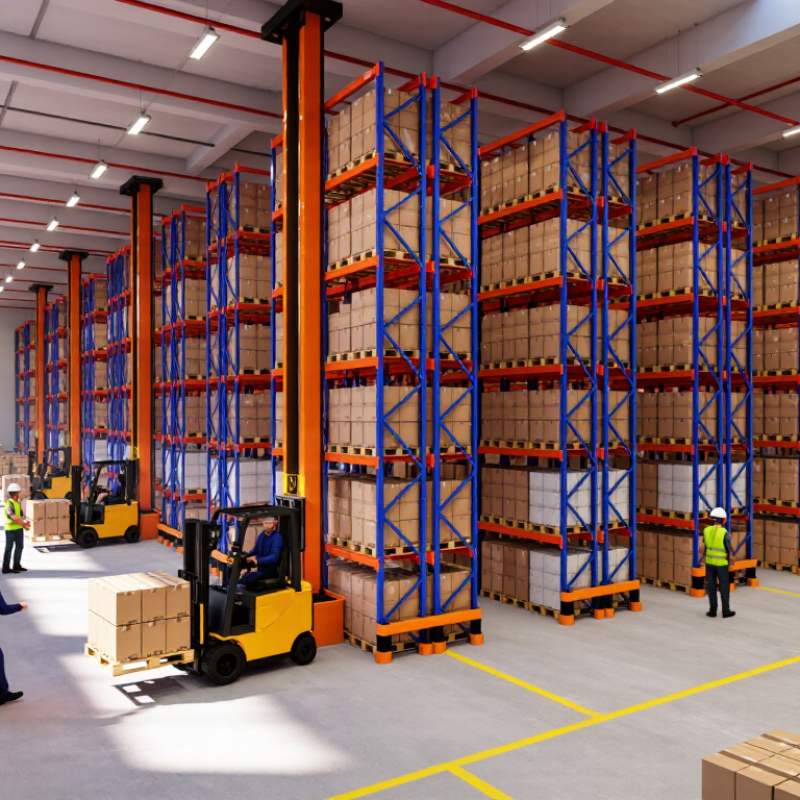
How to Choose Push-Back Storage for Your Warehouse?
Understanding Push-Back Storage and Its Warehouse Applications
Push-back storage uses nested carts or wheeled rails inside a rack lane. Operators load pallets from the front, while each pallet moves backward under controlled force. Removing the front pallet allows the remaining pallets to roll forward. This creates a compact, last-in, first-out storage method for warehouses handling several pallets of the same product.
In daily warehouse operations, push-back systems reduce travel distance and preserve more floor space than many selective racks. They suit medium-turnover goods, seasonal inventory, and products stored in multiple pallet quantities. However, they are not ideal for every stock profile. Fast-moving goods may need direct access, while fragile loads require careful movement control. A warehouse assessment should review pallet dimensions, load weight, rack height, aisle width, and forklift reach before selection.
Safety depends on accurate installation and disciplined use. Rails must match the expected load, and each lane should have clear weight limits. Operators need training on centered pallet placement and gradual forklift movement. Regular inspections can reveal bent components, damaged wheels, or uneven loading before they create larger problems. From practical warehouse planning, one mistake appears often: choosing maximum density before checking picking speed. It saves space, but sometimes increases handling time. The better choice balances capacity, product rotation, worker visibility, and future layout changes. Small compromises matter.
| Evaluation Category | Key Metric | Typical Push-Back Storage Data | Warehouse Application and Selection Guidance |
|---|---|---|---|
| Storage Configuration | Pallet positions per lane | Typically 2–6 pallets deep | Suitable for storing multiple pallets of the same product while maintaining better space utilization than single-deep selective racks. |
| Inventory Access | Stock rotation method | LIFO by design | Best for products without strict first-in, first-out requirements. It is generally unsuitable for highly perishable goods unless inventory controls are carefully managed. |
| Selectivity | Direct access to stored SKUs | Lower than selective pallet racking | Most effective when each lane contains one SKU or one product batch. It is less suitable for warehouses requiring immediate access to every pallet. |
| Space Utilization | Floor-space efficiency | High compared with single-deep storage | A practical option where warehouse space is limited and the operation can accept reduced access selectivity in exchange for higher storage density. |
| Pallet Handling | Loading and unloading principle | The loaded pallet pushes previous pallets backward | During unloading, the next pallet moves forward by gravity or a controlled dynamic mechanism. This reduces the need for a forklift to enter the storage lane. |
| Forklift Operation | Forklift travel inside the lane | Normally limited to the front face | The design can reduce deep-lane forklift travel and help improve handling efficiency, provided operators follow load placement and clearance procedures. |
| Load Capacity | System capacity requirement | Commonly designed for pallet loads from about 500 to 1,500 kg per position | The actual capacity depends on beam levels, lane depth, pallet condition, load distribution, rack height, and local structural requirements. Confirm calculations before installation. |
| Pallet Compatibility | Pallet condition and dimensions | Requires consistent pallet size, quality, and load stability | Damaged, weak, or significantly different pallets may affect roller movement and load stability. Check pallet dimensions and underside construction before selecting the system. |
| Product Profile | Recommended inventory characteristics | Medium-to-high volume with relatively few SKUs | Works well for beverage, packaged food, seasonal merchandise, raw materials, and other palletized goods stored in repeated quantities. |
| Throughput Requirement | Best operating pattern | Batch storage and moderate-to-high pallet movement | Appropriate when goods are received, stored, and dispatched in batches. High-frequency mixed-SKU picking may require a more selective storage solution. |
| Warehouse Layout | Required aisle arrangement | Access from one operating aisle per rack face | The system can reduce the number of aisles compared with conventional selective racks, but sufficient aisle width and forklift turning clearance must still be provided. |
| Safety Requirements | Essential protection measures | Load stops, guide rails, stable pallets, and protected rack frames | Use rack protection, regular inspections, clear load limits, and operator training. Dynamic components should be checked for wear, alignment, and obstruction. |
| Cold Storage | Suitability for refrigerated or frozen areas | Generally suitable when components are specified for low temperatures | Push-back storage can increase storage density in cold rooms, where construction costs make efficient use of cubic space especially valuable. Verify material and lubrication requirements. |
| System Selection | Primary decision factors | SKU count, pallet depth, turnover, rotation policy, load, and available space | Choose push-back storage when density and batch access are more important than full pallet selectivity. Compare it with selective, drive-in, pallet-flow, or automated systems when operating requirements differ. |
Note: Capacity ranges and configuration details are typical planning references. Final specifications should be verified against pallet dimensions, load characteristics, building conditions, seismic requirements, fire protection rules, and applicable local standards.
Measure pallet sizes, weights, and peak quantities for every product type. Count expected pallets by SKU, not only the daily average. Leave space for forklift turning and emergency access. Small details matter.
No. Four lanes may appear efficient but create hidden congestion. Check aisle width, forklift turning radius, and inspection space. A crowded layout can slow every movement.
Push-back storage suits products using last-in, first-out handling. High-turnover products should stay near dispatch areas. Slow-moving stock can use deeper lanes. It may not suit strict first-in, first-out rotation.
Confirm the rated capacity for every storage level. Do not rely on average pallet weight. Mixed loads require separate capacity calculations. Heavy pallets usually belong on lower levels.
Measure beam heights, aisle widths, floor flatness, and sprinkler clearances. Check pallet profiles against the equipment and lane dimensions. A small measurement error can cause repeated forklift contact.
Consider pallet guides, load stops, back guards, rack protectors, and secure anchors. Test carts with real loads, not empty pallets. Operators should center pallets and reject damaged loads. Empty tests can mislead.
Training should include practical loading, unloading, and safe turning exercises. Mark loading direction clearly on the floor or rack. Operators should understand loading depth and pallet overhang risks. A signed checklist is not enough.
Inspect rails, wheels, stops, frames, and anchors during each shift. Record impacts immediately, even when damage looks minor. Arrange formal inspections based on usage and risk. After an impact, inspect again.
Isolate unsafe areas and replace damaged parts with approved components. Verify the repair before returning the lane to service. Check for bent uprights, uneven rails, loose anchors, and pallet overhang. I once allowed too little inspection space. That slowed maintenance.
Choosing the right Push-Back Storage system requires a clear understanding of your warehouse’s inventory characteristics, available space, and required access frequency. This storage method is well suited to facilities that need high-density organization while maintaining access to multiple product loads from the same aisle. Before making a decision, evaluate pallet dimensions, load weights, product turnover, storage depth, and whether a first-in, last-out arrangement meets your operational needs.
Different rack designs and loading methods can influence capacity, handling speed, and ease of use. Consider the appropriate system capacity, layout, aisle width, and safety features for your equipment and workflow. A successful installation should include accurate site planning, stable rack placement, operator training, and clear loading procedures. Regular inspections, maintenance, and timely replacement of worn components will help preserve system performance, improve workplace safety, and support reliable long-term warehouse operations.

 DriveRacks