How to Choose Steel Platforms in 2026

Time:2026-10-18 Author:Amelia
0%

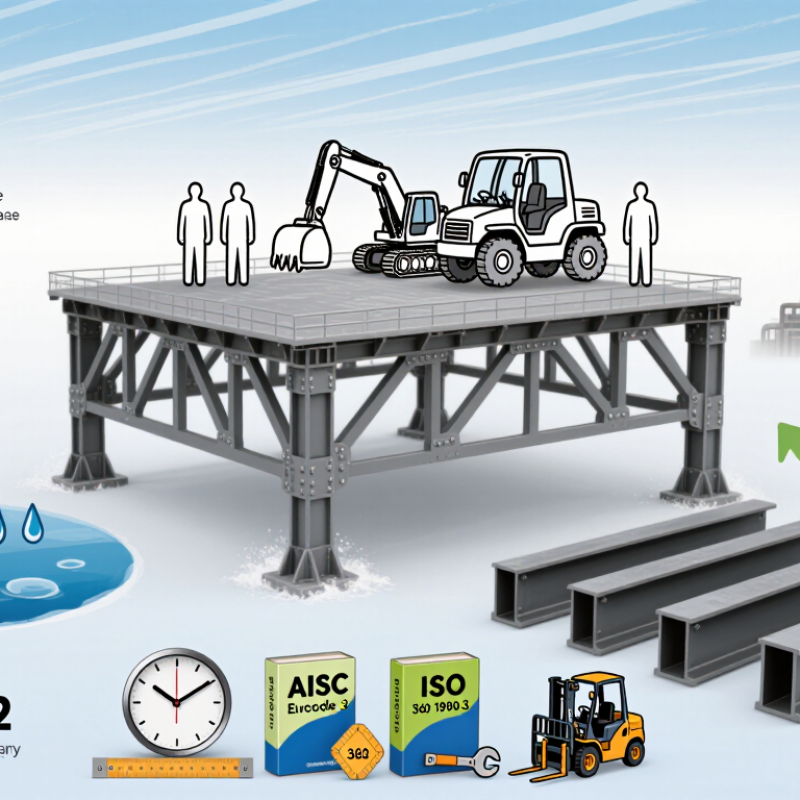
Choosing Steel Platforms in 2026 requires more than comparing purchase prices. The right decision connects load capacity, corrosion resistance, fabrication quality, installation time, and lifetime maintenance. A platform may look economical on paper. It can still become expensive when water collects around welded joints or coatings fail beneath grating.

The World Steel Association’s 2025 Short Range Outlook indicates continuing steel demand growth into 2026. That growth strengthens supply options, but it does not remove material risks. Worldsteel also reports that steelmaking contributes roughly 7%–9% of global carbon dioxide emissions. Buyers should therefore examine recycled content, production routes, transport distance, and future reuse. The International Energy Agency identifies lower-emission steelmaking as an important industrial transition. These findings make lifecycle performance increasingly relevant.

Structural engineer William F. Baker has said, “The structure is the architecture.” His point matters here. A Steel Platforms system must support people, equipment, vibration, drainage, and emergency access without becoming unnecessarily heavy. AISC 360-22, Eurocode 3, and ISO 19902 provide useful technical references for structural design, depending on project location and platform type. However, standards do not replace site experience. Wind, salt spray, forklift impact, and maintenance habits can change the outcome.

A careful selection process compares hot-dip galvanizing with paint systems, open grating with solid decking, and bolted connections with welded assemblies. It also checks inspection access. Small details matter. A perfect specification can still fail through poor installation or neglected inspections. The best 2026 choice is not always the lightest or cheapest platform. It is the one that remains safe, serviceable, and defensible throughout its working life.
How to Choose Steel Platforms in 2026

Define the Intended Use, Load, and Operating Conditions

How to Choose Steel Platforms in 2026

Define the platform’s intended use before comparing steel sections or finishes. A maintenance platform needs clear access, secure handrails, and space for tools. A storage platform may require higher uniform loads and stronger decking. Identify workers, equipment, stored materials, and movement patterns. Then calculate both distributed and concentrated loads. A wheeled cart can create severe point pressure, even when the total weight seems modest. Confirm the design with a qualified structural engineer and applicable local building requirements.

Tips: Write down the heaviest expected load, its position, and how often it moves. Include impact, vibration, and temporary loads. Measure doorway widths, ceiling clearance, and escape routes before fabrication. Small omissions become expensive changes later.

Operating conditions often decide whether a platform performs reliably. Outdoor installations need drainage, corrosion protection, and surfaces that remain slip-resistant when wet. Coastal air, chemicals, dust, heat, and freezing temperatures can change material and coating requirements. Inspect welds, bolted connections, grating, and anchor points during planned maintenance. In field reviews, I have seen platforms selected by load alone, then modified because cleaning access was poor. That mistake is easy to repeat. Recheck visibility, lighting, noise, and worker reach. A slightly larger platform may improve safety, but excessive size can obstruct equipment and increase structural demand. The best choice is not always the heaviest option.

Compare Steel Grades, Coatings, and Structural Durability

How to Choose Steel Platforms in 2026

Steel grade sets the platform’s strength, but it does not decide durability alone. Common structural grades, such as ASTM A36 or S275, suit many moderate-duty platforms. Higher-strength steel can reduce weight, yet thinner members may suffer greater vibration or local buckling. Check the actual load, span, deflection limit, and fatigue exposure before selecting a grade.

Coatings protect the surface where corrosion begins. Hot-dip galvanizing performs well outdoors because zinc shields exposed steel and small scratches. Epoxy and polyurethane systems offer strong chemical resistance, but surface preparation controls their success. In coastal or industrial air, specify a coating system for the measured corrosion category. Inspect welds, bolt holes, drainage points, and concealed contact surfaces. Water trapped beneath a plate can damage steel quietly.

Structural durability also depends on detailing and maintenance access. Use grating that drains quickly, avoid narrow dirt traps, and separate dissimilar metals where galvanic corrosion may occur. In field inspections, platforms often fail around connections rather than in the main beams. That observation is easy to overlook. A qualified structural engineer should verify connections, vibration, fire exposure, and installation tolerances against applicable standards. Do not treat a thicker coating as a substitute for sound design. It is not. Even a well-engineered platform needs periodic checks for rust staining, loose fasteners, coating damage, and unexpected deflection.

How to Choose Steel Platforms in 2026

Compare steel grades, hot-dip galvanized coating thickness, and structural durability considerations.

Structural steel grades are compared by minimum yield strength at room temperature. ASTM A36 is approximately 250 MPa, EN S275JR is 275 MPa, ASTM A572 Grade 50 is 345 MPa, and EN S355JR is 355 MPa. The coating values show typical minimum average hot-dip galvanized coating thicknesses specified by ISO 1461 for different steel thickness ranges. Higher yield strength supports greater load capacity, while long-term platform durability also depends on corrosion exposure, drainage, detailing, weld quality, coating condition, inspection, and maintenance. Coating thickness is not a direct prediction of service life.

Evaluate Platform Design, Dimensions, Access, and Safety Features

How to Choose Steel Platforms in 2026

Evaluate Platform Design, Dimensions, Access, and Safety Features

Choosing a steel platform in 2026 requires more than comparing load ratings. The design must fit the work, the workers, and nearby equipment. Start with the actual task: storage, inspection, maintenance, or repeated material handling. A platform beside a hot pipe needs different clearances than one inside a warehouse. Measure twice. Review live loads, point loads, vibration, drainage, and possible impact from carts. A neat drawing can still hide awkward movement.

Dimensions should support comfortable posture without creating unused steel. Record platform height, usable width, edge length, overhead clearance, and floor openings. Leave enough room for two people to pass when teamwork is necessary. Access deserves equal attention. Choose stairs, ladders, or gates according to traffic frequency and user equipment. Check handrail height, step depth, landing space, and slip resistance during wet conditions. A narrow ladder may save space, but it can slow an emergency exit. That trade-off needs honest review.

Safety features should respond to observed risks, not copied sketches. Use guardrails, toe boards, self-closing gates, non-slip surfaces, and marked load limits where appropriate. Confirm weld quality, connection details, corrosion protection, and inspection access before installation. Ask a qualified engineer to verify structural calculations and local requirements. Do not rely on appearance alone. After installation, watch how people actually move. Their shortcuts may expose a design flaw missed during planning.

How to Choose Steel Platforms in 2026 - Evaluate Platform Design, Dimensions, Access, and Safety Features
Platform Configuration Typical Application Recommended Platform Size Typical Working Load Structural Design Considerations Access Arrangement Essential Safety Features Best-Fit Evaluation
Fixed Industrial Work Platform
General-purpose choice
Permanent access around machinery, production lines, tanks, pumps, and inspection points. Width: 900–1,500 mm
Length: 1,500–6,000 mm
Typical height: 1,500–4,500 mm
Common design range: 2.5–5.0 kN/m² uniform imposed load, subject to engineering verification. Use braced steel framing, non-slip flooring, checked deflection limits, and positive anchorage to the supporting structure or foundation. Stair access is preferred for frequent use. Vertical ladders are generally better suited to occasional access where space is restricted. Guardrails, midrails, toe boards, self-closing gates, handrails, anti-slip decking, and a safe clear route around equipment. Select when the platform will remain in one location and workers need repeated, stable access.
Mezzanine-Style Steel Platform
High-capacity option
Storage, process areas, maintenance zones, and additional working floor space inside industrial buildings. Width: 3,000–12,000 mm
Length: 6,000–30,000 mm
Typical clear height below: 2,400 mm or more where operationally practical
Often designed for 3.5–7.5 kN/m², with higher loads requiring project-specific structural analysis. Columns, primary beams, secondary joists, bracing, floor vibration, imposed loads, point loads, and building connection capacity must all be assessed. Staircases should be used for routine personnel movement. Dedicated pallet gates or material-transfer openings are required where goods cross the edge. Full perimeter guarding, toe boards, pallet gates, impact protection, fire and evacuation review, and controlled loading areas. Select when the main objective is to create substantial elevated floor area rather than only a narrow access route.
Modular or Relocatable Platform
Flexible layout
Temporary production changes, rental facilities, maintenance projects, warehouses, and equipment layouts that may change. Module widths: commonly 1,000–3,000 mm
Adjustable lengths: commonly 2,000–10,000 mm
Typical height: 600–3,000 mm
Common design range: 2.0–5.0 kN/m²; verify load limits after every configuration change. Bolted joints, adjustable legs, locking casters where applicable, cross-bracing, and a stable base are important for repeated reconfiguration. Bolt-on stairs, removable steps, or ladders may be used according to frequency of access and platform height. Wheel brakes or floor anchors, guardrails, locking pins, toe boards, anti-slip surfaces, and clear instructions for assembly and relocation. Select when future expansion, relocation, or rapid installation is more important than maximum structural efficiency.
Mobile Maintenance Platform
Use only on controlled surfaces
Short-duration maintenance, inspection, servicing, and access to vehicles or machinery. Deck width: 600–1,500 mm
Deck length: 1,000–3,000 mm
Typical working height: 1,000–4,000 mm
Common design range: 1.5–3.0 kN/m², with the rated number of users and tools clearly displayed. The frame must resist movement and overturning. Center of gravity, wheel spacing, surface condition, and maximum working height are critical. Integrated stairs or inclined steps are preferable. Access should be possible without climbing on guardrails or equipment. Lockable wheels, wheel chocks where required, full guardrails, toe boards, self-closing access gate, and pre-use inspection. Select when work locations change frequently and the floor is level, firm, unobstructed, and suitable for controlled movement.
Crossover or Bridge Platform
Safe route over obstacles
Crossing conveyors, pipes, ducts, cable trays, production lines, and other obstructions without interrupting operations. Clear stair width: generally 600–1,200 mm
Overall span: commonly 1,500–6,000 mm
Typical step rise: approximately 150–200 mm
Common design range: 2.5–4.0 kN/m², plus consideration of concentrated loads at steps and landings. Assess span, vibration, headroom, support reactions, clearance from moving equipment, and protection against dropped objects. Stair access on both sides is preferred for frequent crossing. Provide landings where the height or route geometry requires them. Guardrails on both sides, toe boards, non-slip steps, handrails, sufficient head clearance, and restricted access to hazardous machinery. Select when workers must cross an obstacle regularly without using unsafe routes around or through equipment.
Roof or Service Access Platform
Requires site-specific review
Maintenance of rooftop equipment, ventilation units, solar equipment, ducts, tanks, and elevated service systems. Walkway width: commonly 600–1,200 mm
Maintenance bay depth: 1,200–2,500 mm
Platform length: determined by equipment layout and escape routes
Common design range: 2.0–3.0 kN/m², plus local loads from tools, replacement parts, and maintenance equipment. Check roof capacity, waterproofing, wind exposure, corrosion environment, thermal movement, drainage, and non-penetrating support options. Fixed stairs are preferred for regular access. Ladders may be appropriate for limited access where permitted by the applicable regulations. Guardrails, toe boards, protected openings, anti-slip grating, controlled gates, fall-protection systems, and emergency egress planning. Select only after confirming the supporting roof structure and the conditions created by weather and maintenance activities.
Corrosion-Resistant Steel Platform
Harsh environments
Wash-down areas, wastewater facilities, coastal locations, chemical-processing zones, and humid industrial environments. Dimensions should follow the selected configuration; commonly 900–1,500 mm walkway width with drainage-friendly open flooring. Use the same structural load basis as the selected platform type, while allowing for coating, grating, and corrosion-related durability requirements. Specify hot-dip galvanizing, suitable protective coatings, stainless or compatible fasteners, drainage, and isolation of dissimilar metals where necessary. Stairs with open grating treads are generally suitable when contamination, water, or process liquids may be present. Non-slip grating, rounded or protected edges, drainage, chemical compatibility review, guardrails, toe boards, and periodic corrosion inspection. Select when moisture, chemicals, salt, or frequent cleaning could shorten the service life of standard painted steel.
Planning note: The dimensions and load ranges shown are typical preliminary values, not a substitute for project-specific structural calculations. Final selection should verify applicable local building, workplace-access, fire, electrical, machine-safety, and fall-protection requirements, together with the actual support structure, occupancy, environment, and installation method.

Check 2026 Standards, Installation Requirements, and Maintenance Needs

Choosing a steel platform in 2026 starts with current requirements, not a catalogue load rating. Confirm local adoption of structural, fire, accessibility, and safety rules. In the United States, engineers may need ASCE 7-22 loads, applicable AISC specifications, and OSHA 1910.23 guardrail provisions. Other regions may require EN 1090 execution controls or ISO 14122 access guidance. Editions and enforcement differ. Verify them with the authority having jurisdiction.

Installation details decide whether design intent survives the jobsite. Check anchor capacity, base-plate level, bolt grade, weld inspection, edge distances, and drainage before steel arrives. OSHA reported 421 construction deaths from falls to lower levels in 2023, within 1,075 construction fatalities. That figure makes temporary edges and incomplete handrails serious concerns, not paperwork. A competent person should document torque checks, weld qualifications, deck openings, and final load testing where required. Keep photographs tied to drawing revisions. Small records matter.

Maintenance should be designed into the platform. Specify corrosion protection for the actual exposure. Inspect coating damage, rust at crevices, loose fasteners, cracked welds, and slippery grating. Plan inspections after severe weather, impact, process changes, or unusual vibration. ISO 55001 supports lifecycle asset management, but it does not replace a platform-specific plan. A maintenance interval copied from another site may be wrong. I would treat it as a starting assumption, not evidence. Recheck the criteria when use changes. Steel rarely announces weakness politely.

Assess Suppliers, Total Costs, Customization, and Long-Term Value

How to Choose Steel Platforms in 2026

Choosing a steel platform in 2026 requires more than comparing quoted prices. A supplier’s factory experience matters. Ask for load calculations, material certificates, welding procedures, and inspection records. Visit a completed installation if possible. Watch how workers handle drainage, edges, and access points. Small details often reveal production discipline. Do not trust polished photographs alone. Good evidence is measurable.

Calculate total cost before signing anything. Include engineering, freight, lifting equipment, surface treatment, installation, inspections, and future repairs. A low bid can become expensive after site modifications. Request a line-item quotation with exclusions clearly marked. Check delivery schedules against your shutdown window. Delays can cost more than steel. I once saw an estimate miss crane standby charges. That mistake was avoidable, but common. Leave a contingency.

Customization should follow site conditions, not fashion. Confirm platform height, live loads, vibration, corrosion exposure, handrail geometry, stairs, and maintenance access. Ask whether components can be replaced without dismantling the entire structure. Modular layouts may reduce downtime later. However, excessive customization can create difficult spare-part requirements. Long-term value depends on documented drawings, coating specifications, warranty terms, and responsive technical support. Require clear maintenance intervals. Review assumptions with an independent engineer when risk is high. Even experienced teams overlook something. Build in a practical review point before fabrication.

FAQS

What should be defined before choosing a steel platform?

Define its use, expected loads, equipment, workers, and movement patterns. A maintenance platform needs clear access and secure handrails. A storage platform needs stronger decking and higher uniform capacity. Write down the heaviest load and its exact position. Small omissions become expensive changes.

Why must concentrated loads be checked separately?

Total weight does not tell the whole story. A wheeled cart may create severe pressure at small contact points. Include distributed, concentrated, impact, vibration, and temporary loads. A qualified structural engineer should verify the design. This step is easy to underestimate.

Which site measurements matter before fabrication?

Measure doorway widths, ceiling clearance, escape routes, and equipment access. Check whether stairs, tools, and replacement parts can pass through. Confirm lighting, visibility, noise, and worker reach. A drawing may look perfect. The doorway may disagree.

How do outdoor conditions affect platform selection?

Outdoor platforms need drainage, corrosion protection, and slip resistance in wet weather. Coastal air, chemicals, dust, heat, and freezing temperatures affect materials and coatings. Inspect welds, anchors, grating, and bolted connections during maintenance. Rust often starts in hidden crevices.

Which requirements should be checked in 2026?

Confirm current local rules for structural design, fire safety, accessibility, guardrails, and worker protection. Requirements differ by location and may change after publication. Ask the local authority or a qualified engineer to verify them. Do not rely on an old catalogue.

What installation details deserve close inspection?

Check anchor capacity, base-plate level, bolt grade, weld quality, edge distances, and drainage. Document torque checks, weld inspections, deck openings, and required load tests. Keep photographs linked to the correct drawing revision. Records can feel tedious. They are useful later.

How should platform maintenance be planned?

Specify inspection intervals for the actual environment, not another facility. Look for coating damage, rust, loose fasteners, cracked welds, and slippery grating. Inspect after severe weather, impact, process changes, or unusual vibration. A copied schedule may be wrong.

How can supplier value be assessed beyond price?

Request load calculations, material certificates, welding procedures, inspection records, drawings, and warranty details. Compare engineering, freight, lifting equipment, installation, repairs, and inspection costs. Mark every quotation exclusion clearly. A low bid can grow quickly. Leave a contingency.

When is customization useful, and when can it cause problems?

Customize for height, loads, vibration, corrosion, stairs, handrails, and maintenance access. Replaceable components can reduce future downtime. Excessive customization may create difficult spare-part needs. Review assumptions before fabrication. Even experienced teams miss details.

Conclusion

Choosing Steel Platforms in 2026 requires a clear understanding of how and where the platform will be used. Start by defining the intended application, expected loads, traffic frequency, environmental exposure, and operating conditions. Then compare suitable steel grades, protective coatings, corrosion resistance, and structural durability to ensure reliable long-term performance. The platform’s design should also be reviewed carefully, including dimensions, load distribution, access points, guardrails, stairs, working clearances, and other safety features.

It is equally important to verify current 2026 standards, installation requirements, inspection procedures, and maintenance needs before making a decision. When evaluating suppliers, consider engineering support, customization options, delivery capability, warranty terms, and installation services. Instead of focusing only on the initial purchase price, assess total costs over the platform’s service life, including maintenance, repairs, downtime, and future modifications. A well-selected Steel Platforms solution should provide safe operation, structural reliability, practical usability, and strong long-term value.

Amelia

Amelia

Amelia is a seasoned marketing professional with a wealth of expertise in our company’s core offerings. With an unwavering passion for driving growth and innovation, she plays a pivotal role in shaping our marketing strategies and enhancing brand visibility. A key aspect of her responsibilities......