For global buyers, choosing a Carton Flow Storage supplier in China requires more than comparing unit prices. The right partner should understand warehouse movement, product dimensions, and daily picking pressure. A supplier may offer polished drawings, but practical performance matters more. Can the lanes handle uneven cartons? Do the rollers move lightweight boxes smoothly? These details often decide whether a system saves labor or creates repeated delays.
Warehouse design authority James A. Tompkins stated, “The goal of material handling is to move the right material, in the right amount, in the right condition, to the right place, at the right time, for the right cost.” This principle remains useful when evaluating Chinese suppliers. A reliable Carton Flow Storage manufacturer should provide suitable lane widths, adjustable dividers, durable rollers, and clear replenishment access. It should also explain load limits honestly. Not every product needs the same configuration.
The best suppliers usually support sampling, engineering review, export packaging, and installation guidance. Ask for drawings showing carton dimensions, rack depth, slope, and operating direction. Request evidence from comparable warehouse projects. Photos help, but measured results are stronger. Lead time matters. So does communication after delivery.
Some buyers focus too heavily on factory scale. That can be a mistake. A smaller manufacturer may respond faster, while a large factory may offer stronger quality controls. Neither assumption is always correct. Global buyers should inspect tolerances, surface finish, replacement parts, and warranty terms. A carefully tested solution may cost more initially, yet reduce picking friction and maintenance surprises over time.
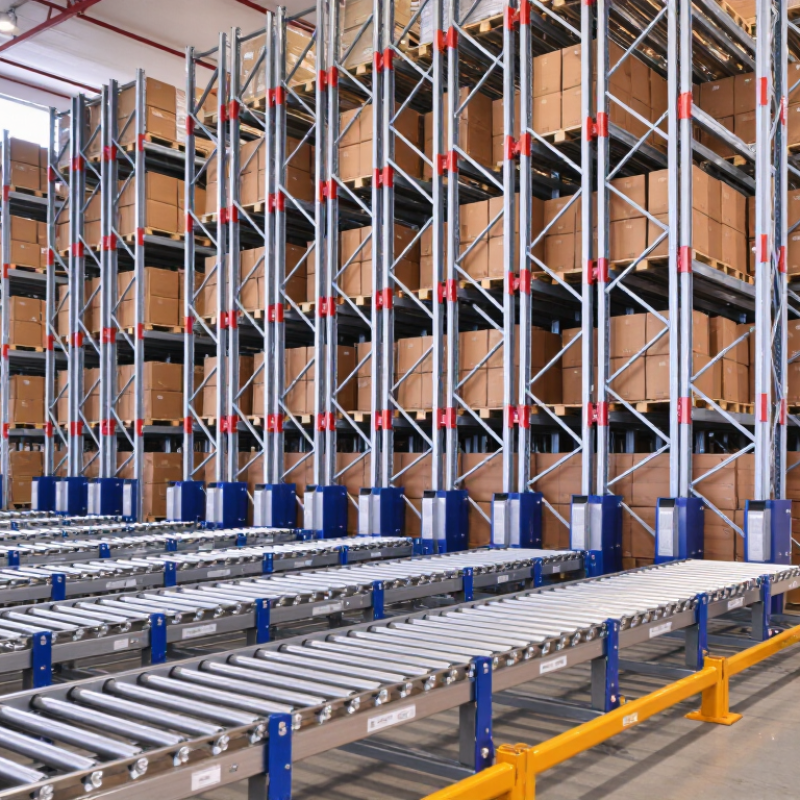
Carton flow storage is a gravity-fed racking system for cartons, totes, and small packaged goods. Each lane contains inclined rollers or wheel tracks. Workers load products from the rear and pick them from the front. The carton moves forward as stock is removed.
The system supports FIFO inventory rotation, meaning the oldest carton usually reaches the picking face first. This helps warehouses manage dated goods and reduce forgotten stock. Dividers keep products aligned, while lane labels improve identification. A typical operator places a carton on the loading side, checks its orientation, and confirms that it rolls smoothly. Small details matter.
Carton flow storage works best when lane width, roller spacing, carton weight, and product turnover match actual operating conditions. Light cartons may stop on rough tracks, while heavy cartons can move too quickly without braking features. That issue is easy to overlook. A practical supplier should test representative cartons before final design approval. Load capacity, replenishment access, ergonomic height, and local safety requirements also deserve careful review. In my experience, warehouses often focus on maximum capacity and underestimate picking comfort. That can reduce efficiency over time. Suppliers serving global buyers should provide clear drawings, load data, installation guidance, and replacement-part information. Performance depends on the complete setup, not only the rack frame.
Top Carton Flow Storage Suppliers in China for Global Buyers
China’s carton flow storage market serves warehouses handling retail, parts, and e-commerce orders. The key choice is the lane design, not only the rack frame. Carton flow systems usually use gravity to move cartons toward the picking face. Each lane has an incline, rollers, or wheels that support controlled movement. Small details matter.
Gravity roller flow racks suit medium and heavy cartons with stable bases. Rollers reduce friction and help operators pull cartons without lifting them far. Wheel-bed systems work well with lighter cartons and narrow product lanes. They offer lower resistance, but damaged carton bottoms can interrupt movement. Powered carton flow systems use motorized rollers for higher volume operations. They provide steadier replenishment, though they require more controls and maintenance. Some suppliers also build adjustable lanes for mixed carton sizes. That sounds simple.
Experienced Chinese suppliers should confirm carton dimensions, weight ranges, lane depth, and replenishment frequency before designing equipment. Buyers should request load tests, roller spacing details, surface treatment information, and installation drawings. A reliable supplier can explain how the system supports FIFO picking and how dividers prevent carton drift. However, one design rarely fits every warehouse. I have seen narrow lanes improve access while reducing reserve capacity. Real site trials often reveal this trade-off. Clear communication about tolerances, packaging changes, and local installation skills prevents expensive adjustments later.
| Carton Flow System Type | Primary Components and Operating Principle | Typical Load Capacity | Common Storage Levels | Typical Track Inclination | Suitable Applications | Main Advantages | Key Purchasing Considerations |
|---|---|---|---|---|---|---|---|
| Gravity Roller Carton Flow Rack | Inclined lanes fitted with steel or plastic gravity rollers. Cartons move from the replenishment side to the picking side by gravity. | Approximately 50–150 kg per lane, depending on roller spacing, carton dimensions, and rack design. | Usually 3–8 picking levels | Approximately 3°–6° | Medium- to high-volume piece picking, distribution centers, order fulfillment, and FIFO inventory rotation. | Good carton movement, strong durability, clear separation of replenishment and picking operations, and easy lane access. | Roller spacing must support the smallest carton; lane width and brake rollers should match product weight and speed. |
| Wheel-Bed Carton Flow Rack | Inclined lanes using closely spaced wheels mounted on axles or rails. Low-friction wheels allow lightweight cartons to move smoothly. | Approximately 30–100 kg per lane, depending on wheel type and lane length. | Usually 3–7 picking levels | Approximately 3°–5° | Light cartons, small parts, e-commerce items, retail replenishment, and fast-moving SKU picking. | Lower rolling resistance, flexible lane configuration, and effective handling of lightweight or irregularly shaped packages. | Wheel wear, carton bottom quality, and product stability should be checked before selection; heavy cartons may require rollers. |
| FIFO Carton Flow Shelving | Modular shelving with inclined roller or wheel lanes. New stock is loaded at the rear while operators pick from the front. | Approximately 40–120 kg per lane | Usually 3–6 levels | Approximately 3°–6° | Food and beverage distribution, pharmaceuticals, cosmetics, consumer goods, and products requiring stock rotation. | Supports first-in, first-out rotation, reduces picker travel, and provides direct access to individual SKUs. | Lane labels, dividers, stop plates, and product expiry controls should be included in the design. |
| Push-Back Carton Flow System | Cartons are loaded from the front and push earlier cartons backward on inclined rollers or wheeled tracks. | Approximately 50–150 kg per lane | Usually 2–5 cartons deep per lane | Approximately 3°–7° | High-density storage for reserve inventory, limited-SKU operations, and locations where rear replenishment access is unavailable. | Uses a single aisle for loading and picking, improves storage density, and reduces replenishment travel. | Less suitable for strict FIFO control; carton dimensions and stacking stability must be consistent. |
| Carton Flow Pick Module | Multi-level structure combining carton flow lanes, shelving, walkways, stairs, guardrails, and replenishment access. | Approximately 50–200 kg per lane; structural capacity is calculated separately. | Usually 2–4 operator levels | Approximately 3°–6° for flow lanes | Large e-commerce operations, third-party logistics, omnichannel fulfillment, and high-SKU distribution centers. | High SKU density, improved picking productivity, scalable layout, and efficient use of vertical warehouse space. | Requires detailed structural engineering, aisle planning, pedestrian protection, lighting, and installation coordination. |
| Carton Flow Rack with Brake Rollers | Gravity flow lanes equipped with brake rollers or speed controllers to regulate carton movement on long or steep lanes. | Approximately 60–150 kg per lane | Usually 3–8 picking levels | Approximately 3°–6° | Heavy cartons, fragile products, long lanes, and operations requiring controlled presentation at the picking face. | Reduces impact between cartons, improves operator safety, and helps maintain consistent product flow. | Brake capacity must be matched to carton weight; inspection and replacement access should be considered. |
| Adjustable Modular Carton Flow Shelving | Bolted or clip-in shelving frame with adjustable lane dividers, roller tracks, front stops, and interchangeable components. | Approximately 30–120 kg per lane | Usually 3–7 levels | Approximately 3°–6° | Warehouses with changing SKU dimensions, seasonal inventory, spare parts, and mixed carton sizes. | Easy to reconfigure, suitable for phased expansion, and adaptable to changing product assortments. | Confirm adjustment increments, spare-part availability, frame stability, and compatibility with local pallet-rack layouts. |
| Typical values are industry reference ranges for preliminary comparison. Final specifications should be verified through carton dimensions, carton weight, lane length, throughput, rack height, seismic requirements, local safety regulations, and a site-specific structural calculation. | |||||||
Leading Chinese carton flow suppliers combine practical warehouse experience with flexible manufacturing capacity. Many operate metalworking, roller assembly, welding, and powder-coating lines under one production system. This setup supports stable dimensions and shorter communication chains. Their engineers often review carton size, load weight, picking frequency, and rack depth before suggesting a configuration. That matters because a low-cost roller track may fail under uneven cartons.
Customization is a major capability. Suppliers can adjust lane width, frame height, roller spacing, guide rails, dividers, and replenishment access. Some also develop gravity lanes for manual picking, case-flow storage, and mixed carton sizes. During quality checks, experienced teams inspect weld points, coating thickness, roller movement, and load performance. Sample testing is useful here. It exposes problems that drawings may hide.
Export-oriented manufacturers usually provide assembly drawings, packing lists, installation guidance, and replacement-part support. They may also prepare documentation for different destination requirements. Still, not every supplier manages projects equally well. A polished catalog proves little. Buyers should request production photos, inspection records, material details, and references from similar warehouses. One weakness deserves attention: customized designs can become overly complex when teams add features without studying daily picking habits. A simpler lane may work better. Clear feedback during sampling helps correct that mistake before mass production begins.
Global buyers should evaluate Chinese carton flow storage suppliers beyond attractive catalog prices. A serious review starts with the factory, not the sales office. Ask for production photos, equipment lists, quality records, and recent export references. During a video audit, inspect welding stations, roller assembly areas, and finished-goods storage. Details matter.
Request a sample bay before approving a full order. Test carton movement with your actual box sizes and weights. Check frame tolerances, roller spacing, surface treatment, and load capacity. Ask whether capacity applies to evenly distributed loads or real operating conditions. A supplier should provide clear drawings, material specifications, inspection plans, and replacement-part guidance. Certification helps, but traceable records matter more.
Communication is another practical test. Send one technical question to several suppliers and compare their answers. Reliable teams clarify unclear requirements instead of promising everything. Confirm lead times, export packaging, labeling, installation instructions, and warranty limits in writing. I have seen polished factory videos hide weak documentation. Do not ignore that warning. A small pilot order can reveal missed dimensions, loose rollers, or damaged edges before a container leaves China. The evaluation may feel slower, but rushed selection often creates expensive warehouse problems.
When ordering carton flow storage from China, global buyers should begin with operating data, not catalog images. Record carton length, width, height, weight, daily picks, and replenishment frequency. A supplier should then confirm roller pitch, frame load, shelf depth, slope, and carton stop design. In practical sourcing work, unclear carton measurements often create costly rework. Small details matter. Ask for a 2D drawing, load-test evidence, surface-finish specification, and a sample lane before approving mass production.
Customization should support warehouse behavior, not decoration. Adjustable dividers help when carton sizes change. Reinforced frames may suit heavier goods, while low-friction rollers improve manual picking. The MHI 2024 Annual Industry Report identifies continued investment in supply-chain technology as a major industry priority, but automation is not always the correct answer. A simple gravity lane can outperform a complex system when volumes are moderate. I have seen buyers over-specify steel and under-specify replenishment access. That balance deserves review.
International shipping requires early coordination. Confirm the packed dimensions, gross weight, pallet material, fumigation requirements, and container loading plan. UNCTAD’s Review of Maritime Transport 2023 reports that more than 80% of world trade by volume moves by sea, making port delays and freight volatility relevant to project timing. Request commercial invoices, packing lists, certificates of origin, and clear HS-code guidance from a qualified customs broker. Freight is unforgiving. Build buffer time for production inspection, export clearance, transshipment, and destination delivery. A pre-shipment video is useful, but it cannot replace physical inspection.
Engineers should check carton size, load weight, picking frequency, and rack depth. A low-cost track may fail with uneven cartons.
They can adjust lane width, frame height, roller spacing, guide rails, dividers, and replenishment access. Mixed carton sizes may require different lane arrangements.
Request a sample bay using your actual carton sizes and weights. Check weld points, coating thickness, roller movement, frame tolerances, and load performance. Drawings can hide problems.
Ask for production photos, equipment lists, inspection records, material details, and similar warehouse references. A polished catalog proves little.
During a video audit, view welding stations, roller assembly areas, and finished-goods storage. Look for real production activity, not only prepared scenes.
Request assembly drawings, packing lists, material specifications, inspection plans, installation guidance, and replacement-part information. Confirm warranty limits in writing.
Send the same technical question to several suppliers. Reliable teams clarify unclear requirements instead of promising everything. That small test matters.
A pilot order can reveal missed dimensions, loose rollers, damaged edges, or packaging weaknesses. It may feel slower, but rushed selection creates costly warehouse problems.
Yes. Extra features can make lanes complex without improving daily picking. Sometimes, simpler wins. Review actual operator habits before adding dividers or access features.
Carton Flow Storage is a dynamic shelving solution that uses inclined rollers or wheels to move cartons from the loading side toward the picking side. By supporting first-in, first-out inventory rotation, it can improve product visibility, reduce walking time, and make order fulfillment more efficient. Chinese suppliers commonly provide gravity flow racks, carton live storage systems, modular picking lanes, and integrated solutions for warehouses, distribution centers, and manufacturing facilities.
Leading Chinese suppliers often offer engineering design, customized dimensions, adjustable components, load testing, and production quality control. Global buyers should evaluate material strength, manufacturing consistency, technical support, certification needs, communication efficiency, and total project cost rather than focusing only on the initial price. Before ordering, buyers should confirm layout drawings, carton sizes, load requirements, packaging standards, installation responsibilities, payment terms, and inspection procedures. International shipping also requires careful planning for documentation, cargo protection, delivery schedules, and compliance with destination-country regulations.

DriveRacks